A Missed Repair Can Cost More Than You Think.
A maintenance issue isn't just about fixing what's broken. In this week's article, Katie explains why every repair request brings legal responsibilities, how delays can put landlords at risk, and why having the right systems in place protects both your property and your investment.
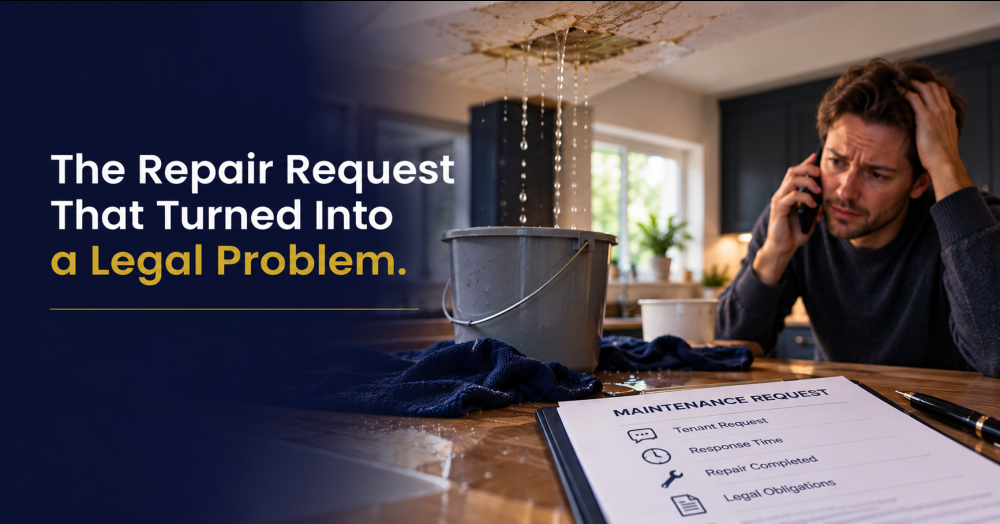
The Repair Request That Turned Into a Legal Problem.
When a tenant reports something that needs fixing, most landlords think about it practically.
What is it? How much will it cost? Who can I get out to sort it?
What a lot of landlords do not realise is that the moment a tenant reports a repair, a legal clock starts ticking.
You have a legal obligation to respond within a reasonable time and to carry out the necessary repair within a reasonable period. What is reasonable depends on the severity. An emergency — no heating in winter, a major leak, anything gas-related — requires same-day response. Routine repairs generally need to be addressed within twenty-eight days.
If you do not respond promptly, or if the repair drags on, your tenant may have grounds to withhold rent, to carry out the repair themselves and deduct the cost, or to make a formal disrepair claim.
The cost of any of those outcomes is almost always significantly more than the repair itself would have been.
Where self-managing landlords get into trouble
It is rarely about intention. Most landlords genuinely want to maintain their properties properly.
The problem is usually process.
A maintenance request comes in on a busy Tuesday. The landlord means to deal with it but things get in the way. A few days pass. The tenant chases. The landlord contacts a contractor who is not available for another week and a half. The repair drags on longer than anyone wanted.
Meanwhile the tenant's frustration grows, their awareness of their rights grows, and the landlord's legal exposure quietly grows with it.
How we handle maintenance at Harrisons
When a request comes in to our team it gets triaged immediately. Emergencies are dealt with the same day. Routine issues are acknowledged and the tenant is given a clear timeframe.
We have a trusted network of local contractors we know well. They do good work, they are reliable and we have a proper relationship with them. Every repair is logged, tracked and completed within the required timeframe.
Our landlords do not manage this process. We do.
Your action point this week
Think back to the last maintenance request you received on a property you manage.
How quickly did you acknowledge it? How quickly was it actually resolved? Did the tenant have to chase you at any point?
If the process felt reactive rather than organised, that is worth addressing.
If you are on a let-only arrangement and you are starting to wonder whether it is actually working for you, come and talk to us. Switching to full management is a lot simpler than most landlords expect, and we will walk you through exactly what it involves. Call us on 01204 659670, email katie@harrisonsnet.co.uk or visit harrisonsnet.co.uk.
Here's to your property success!
Katie
Harrisons Estate Agents
01204 659670 | katie@harrisonsnet.co.uk | harrisonsnet.co.uk